






AestheticStudio Logo

Wart Treatment

Category: Body
Wart Treatment

Treatment Details

Session

4-6 Sessions


Operation Length

30 minutes


Anesthesia

None


Discomfort Period

None


Return To Work

The same day


Full Recovery

1 Week After Sessions


Results

Permanent


Hospital Stay

No

What Is a Wart and What Causes It?

A wart is a small, raised skin lesion that forms on the top layer of the skin. The primary cause of common warts is the Human Papillomavirus (HPV). When this virus infects the skin cells, typically through direct contact or a break in the skin, it can lead to the rapid growth of cells on the skin's outer layer, forming the rough bump we identify as a wart. The viruses that cause warts, particularly HPV, can enter the body through various means. Transmission often occurs through direct skin-to-skin contact with an infected person. The risk of transmission increases significantly if there is an open wound or cut on the skin. Warts can be spread from one person to another or from one part of a person's body to another. While HPV is the direct cause, other factors can contribute to wart formation, including a weakened immune system and genetic predispositions. It's important to understand that since the underlying virus cannot always be completely eradicated from the body, the primary goal of treatment is to remove the physical wart itself, thereby eliminating the visual deformity and any associated discomfort.

Common Locations and Appearance

Warts typically appear as small, raised lesions on the skin and may have a slightly different color or a rougher texture than the surrounding skin. They can occur on various parts of the body, with common locations including the hands, feet (plantar warts), face, and genital area. Different strains of the HPV virus can lead to the development of different types of warts.

Who is a Candidate for Wart Treatment?

Wart treatment is a suitable option for anyone who has developed these skin lesions. Warts are common in both children and adults, and since the treatment is primarily a medical procedure, it can generally be performed regardless of age. Anyone of any age can seek treatment for warts and skin lesions. However, for more invasive methods like surgical excision, a doctor's consultation is necessary, and age considerations may apply.

How Are Warts Treated?

The choice of treatment depends on the type, size, and location of the wart, as well as the patient's overall health. While some over-the-counter cosmetic products exist, professional medical procedures are often more effective. Common treatment methods include:

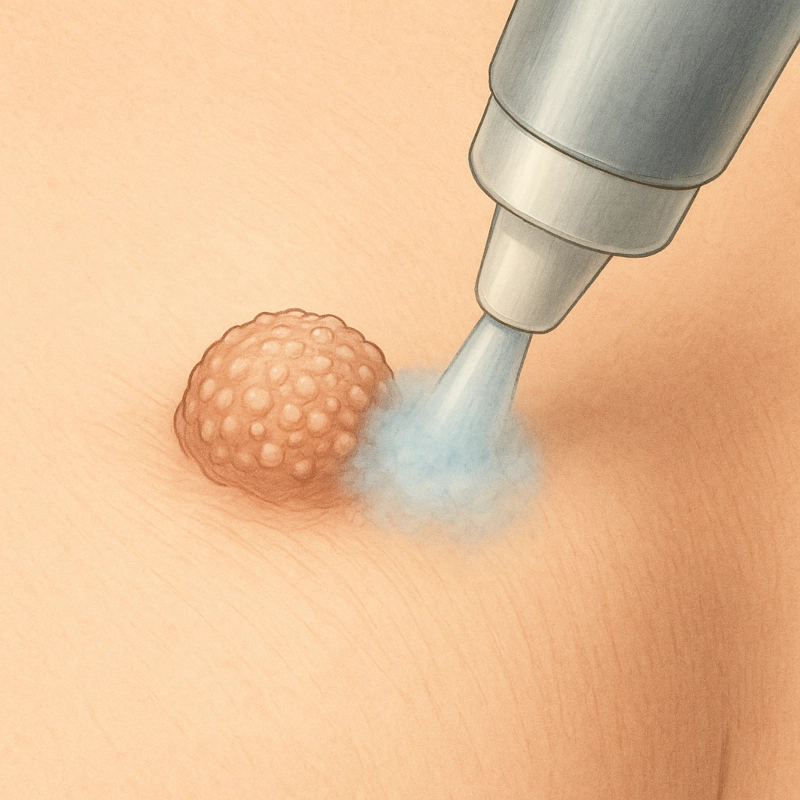
  • Cryotherapy: Freezing the wart off.
  • Laser Therapy: Using a laser to destroy the wart tissue.
  • Surgical Excision: Cutting the wart out.
  • Electrocautery: Burning the wart off with an electric current.

Laser treatments and electrocautery are often preferred as they can be both practical and painless.

Focus on: Electrocautery

Electrocautery is a medical procedure that uses a high-frequency electric current to burn or remove unwanted tissue, making it a very effective method for treating warts. The procedure is performed under local anesthesia, which is applied directly to the area to ensure the process is painless for the patient. A specialized tool then uses a controlled electric current to heat and destroy the wart tissue, effectively removing it from the skin's surface. Afterward, an antiseptic substance and a wound covering are applied to the treated area. With proper care and protection as the site heals, warts can be successfully removed using electrocautery, often without leaving a scar.

hair
dental
rhinoplasty
breast