







Septoplasty Surgery
Category: Nose

Treatment Details
Session
1
Operation length
1-3 hours
Anesthesia
General Anesthesia
Discomfort Period
3-7 Days
Return to work
7-10 days
Full Recovery
Should be checked
Results
Permanent
Hospital Stay
1 Day
Understanding Septoplasty Surgery
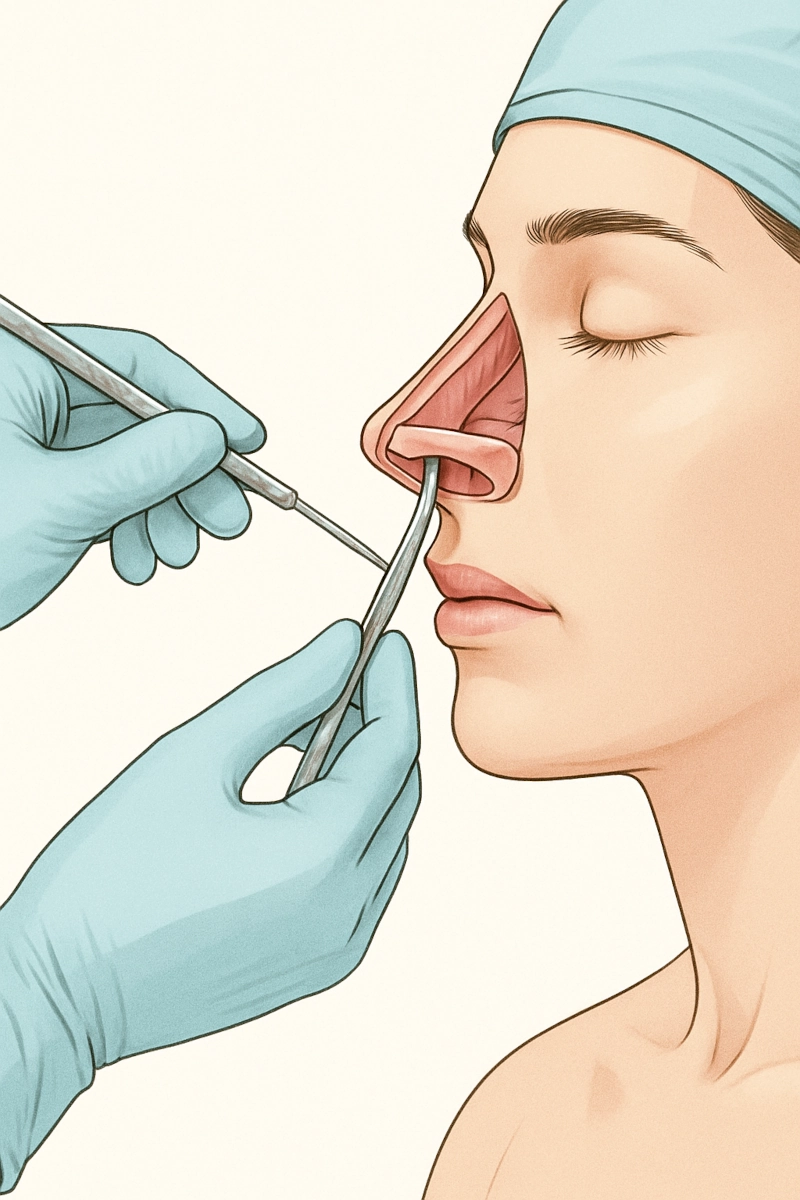
Septoplasty is a surgical procedure designed to correct the nasal septum, which is the wall of cartilage and bone that divides the nasal cavity into two halves. While the septum is an internal structure, a significant deviation can sometimes affect the external appearance of the nose. More commonly, a crooked or deformed septum obstructs the airway, leading to nasal congestion and difficulty breathing. This functional issue can trigger a range of health problems, including chronic sinus infections, disruptive snoring, and even sleep apnea, a condition where breathing repeatedly stops and starts during sleep.
When is Septoplasty Surgery Performed?
Septoplasty is recommended to address specific health and quality-of-life issues stemming from a deviated septum. The primary reasons for undergoing the procedure are:
- Breathing Problems: A crooked nasal septum can block airflow on one or both sides, causing chronic nasal congestion. Septoplasty corrects this internal curvature, opening the airway and making it easier to breathe through the nose.
- Chronic Sinus Infections: When the septum is deviated, it can obstruct the natural drainage of the sinuses. This blockage can lead to recurrent sinus infections. By improving nasal airflow, septoplasty can positively impact sinus health.
- Snoring and Sleep Apnea: Nasal obstruction from a deviated septum is a common cause of snoring and can be a contributing factor to obstructive sleep apnea. By clearing the airway, septoplasty can help alleviate or reduce these sleep-related breathing problems.
- Nasal Trauma: Injuries such as a nasal fracture can displace the septum and cause a deformity. In these cases, septoplasty may be required to correct the damage and restore proper function.
- Improved Quality of Life: Individuals whose general quality of life is diminished by constant respiratory distress and nasal obstruction may choose septoplasty to resolve these persistent issues and improve their overall well-being.
Is Septoplasty an Aesthetic Procedure?
Fundamentally, septoplasty is a functional, medical surgery, not an aesthetic one. The primary goal is to correct the deviated septum to create a wider airway, thereby improving breathing and reducing related health problems. During a standard septoplasty, no changes are made to the external appearance of the nose. However, it is common for septoplasty to be performed at the same time as a rhinoplasty (aesthetic nose surgery). This combined procedure, often called a septorhinoplasty, aims to meet both the medical and aesthetic needs of the patient simultaneously.
- Septoplasty focuses on correcting the internal septum for medical reasons.
- Rhinoplasty focuses on reshaping or resizing the external nose for aesthetic improvement by altering the bone and cartilage structure to enhance its shape, size, and symmetry.
By combining the two, a patient can fix functional breathing issues while also achieving their desired cosmetic look in a single operation.