
AestheticStudio Logo

Rhinoplasty (Nose Job)

Category: Nose
Rhinoplasty (Nose Job)

Treatment Details

Session

1


Operation length

1-3 Hours


Anesthesia

General


Discomfort period

3-4 Days


Return to work

5-7 Days


Full Recovery

Should be checked


Results

Permanent


Stay in Hospital

1 day

Understanding Rhinoplasty (Nose Job Surgery)

Rhinoplasty, commonly known as a nose job, is a surgical procedure designed to correct or reconstruct the nose. It addresses deformities, an asymmetrical shape, or impaired breathing function that may result from genetics or injury. The history of this procedure is extensive. Archaeological studies suggest that the concept of nose surgery dates back to Ancient Egypt. According to ancient Indian texts, the first rhinoplasty was performed in the 600s by a doctor named Sushruta, who used skin from the cheek for reconstruction. The first nose reduction surgery, which resembles modern open rhinoplasty, was performed in the 15th century. It wasn't until the 18th century that German surgeon Carl Von Graefe coined the term 'rhinoplasty' for these procedures. In 1891, ENT Specialist Orlando Rou was the first to show that correcting nasal tip curvatures for health reasons also changed a person's facial expression. Modern techniques began to develop around 1937. Initially focused on correcting nasal curvatures and breaks, rhinoplasty evolved with technical and technological advancements to also include aesthetic considerations. These developments have led to more natural-looking results, establishing the foundation for permanent and healthy aesthetic nasal surgery.

What Are the Types of Nose Jobs?

Nose job operations aim to create a nose that is harmonious, proportional, and symmetrical with the rest of the face. There are several types, depending on the specific issues being addressed.

Surgical Rhinoplasty

  1. Primary Rhinoplasty This is a first-time nose surgery performed to correct deformities caused by genetic factors or trauma. If there is a prominent nasal arch (dorsal hump), it is removed, and if necessary, the cartilage is reduced and the nose is shortened to achieve facial balance.
  2. Reconstructive (Revision) Surgery This procedure is for patients who have had a previous nose job but require further correction because the initial problem was not fully resolved. In reconstructive surgery, the nose is often reshaped to achieve a better aesthetic appearance that is compatible with the face.
  3. Tiplasty (Tip Rhinoplasty) This is an operation focused solely on the structure of the nasal tip and its underlying cartilage. It is performed to eliminate deformities at the tip of the nose without altering the nasal bone.
  4. Septorhinoplasty This is a dual-purpose operation that reshapes the nose aesthetically while also correcting structural issues that cause breathing problems. During the surgery, cartilage curvatures and any part of the nasal arch structure that obstructs breathing are corrected.
  5. Concha (Turbinate) Surgery The fleshy structures inside the nose, known as turbinates or conchae, can become enlarged due to allergic reactions or other physiological reasons, blocking airflow. In this procedure, the conchae are surgically reduced in size, opening the air channels and allowing the person to breathe more easily.

Non-Surgical Rhinoplasty

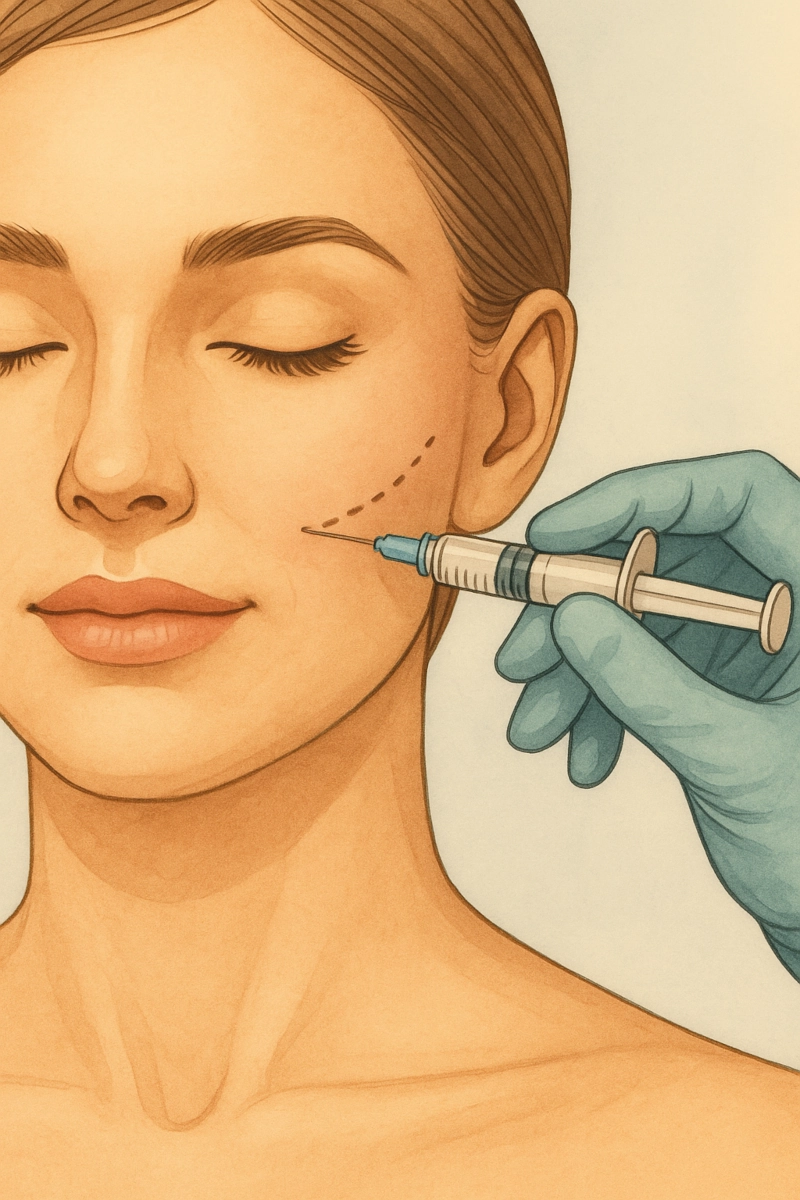
Also known as 'Liquid Rhinoplasty', this is a non-surgical procedure where only the external shape of the nose is altered without anesthesia. Non-surgical rhinoplasty is performed by injecting dermal fillers into specific areas to smooth out bumps, correct a droopy nasal tip, or improve a wrinkled appearance. The results of liquid rhinoplasty are temporary, as the fillers used are designed to dissolve safely over time.

Surgical Techniques: Open vs. Closed Rhinoplasty

A surgeon will decide on the best surgical technique based on the patient's needs. The two main approaches are:

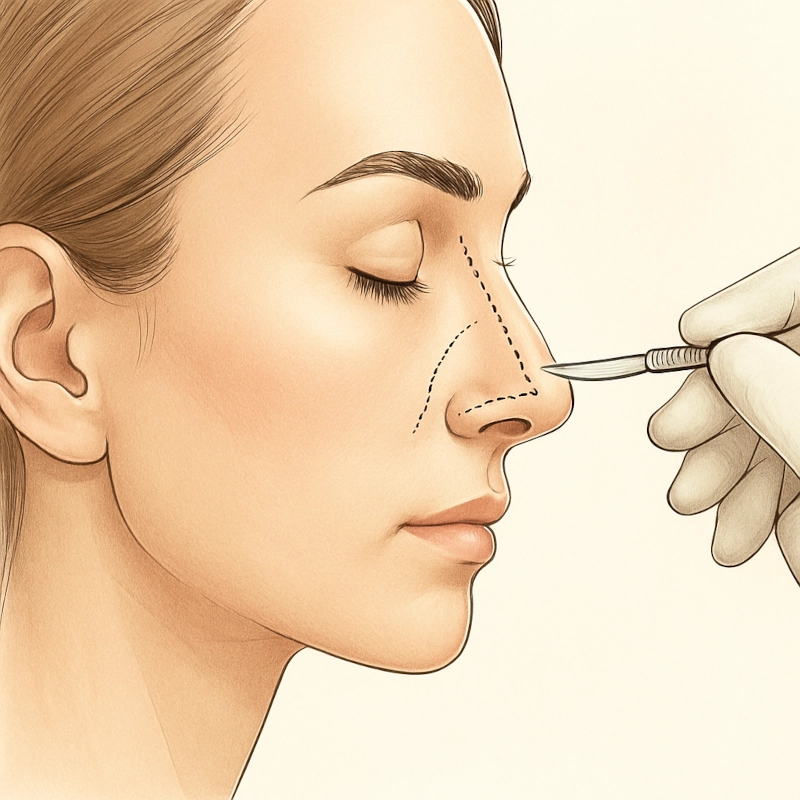
Open Rhinoplasty: This technique is often preferred for more complex cases, such as those involving significant breathing problems, a low nasal tip, cartilage collapse, enlarged conchae, or the need for revision surgery. An incision is made on the columella (the strip of skin between the nostrils), allowing the surgeon to lift the skin and directly view and manipulate the bone and cartilage. Closed Rhinoplasty: Also known as non-scarring rhinoplasty, this operation is performed through incisions made entirely on the inside of the nose. This technique is generally associated with a faster recovery time compared to open rhinoplasty.

The Rhinoplasty Procedure

The process begins with a doctor's consultation where your nasal anatomy, cartilage, and internal nasal structures are examined. Imaging may be used to assess issues like breathing difficulties or sinusitis. Based on this evaluation, the surgeon determines the appropriate surgical technique. The surgery is typically performed under general anesthesia and lasts about 2 hours, although reconstructive or revision surgeries may take longer. The surgeon will first address any internal functional problems (like a deviated septum or breathing obstructions). Following that, the bone structure, cartilage, and septum are adjusted to achieve the desired aesthetic appearance, ensuring both a healthy side profile and a perfect frontal view.

Key Considerations Before and After Rhinoplasty

To ensure a smooth recovery, there are important points to consider both before and after the procedure.

Before the Surgery

  • Your health history will be reviewed, and blood tests will be taken to ensure you are a suitable candidate for surgery.
  • If your operation is under general anesthesia, you must not eat or drink for at least 8 hours beforehand.
  • Stop taking blood-thinning medications (including certain vitamin D and E supplements), herbal teas, and other supplements at least two days prior to surgery.
  • Inform your doctor and anesthesiologist about any regular medications you must take.
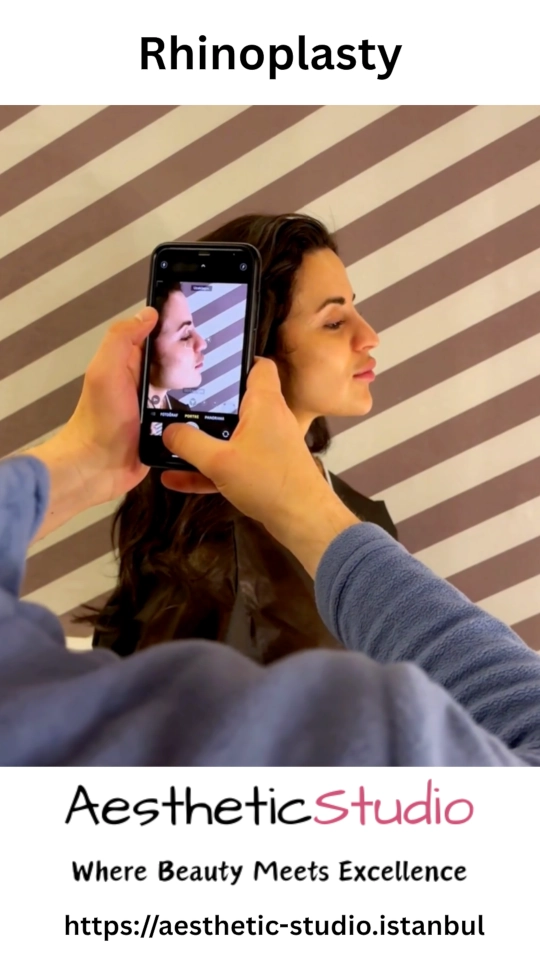
  • Photographs will be taken from the right and left profiles to compare the results before and after the surgery.

After the Surgery

  • Choose comfortable, front-buttoned clothing to avoid pulling anything over your head.
  • Breathe through your mouth to avoid putting pressure on the nasal tampons.
  • Do not lift heavy items and prioritize rest.
  • Protect your nose from any impacts that could cause permanent damage.
  • Avoid spicy foods, which can increase swelling.

The Healing Process

What to Expect 3 Weeks After Rhinoplasty?

Three weeks after surgery, you will see marked changes. About 70% of the swelling is typically gone, and the new structure of the nose becomes more prominent. Once the plaster is removed, your facial expressions will be more natural. A slight numbness at the tip of the nose is normal and usually subsides after six months as the nose's definition continues to improve. The difference between the nose at 1 month and 1 year post-op is significant.

When Will My Nose Feel Normal?

Numbness is common in the first few days after surgery. This sensation decreases as the nose heals and internal crusting is reduced. Most patients begin to feel normal sensation in their nose about 3 months after the procedure.

How Long to See the Final Results?

You will see noticeable results three to five months after the operation as the facial swelling goes down. However, the delicate structure of the nose requires a longer recovery time for all swelling to fully dissipate. Final results are typically visible after one year. If a patient is not satisfied, any additional interventions are planned at least one year after the initial surgery. The probability of needing a secondary (revision) rhinoplasty is about 10-15%.

Frequently Asked Questions

How much does a nose job cost?

The cost of a nose job varies depending on the complexity of the procedure and the quality standards of the hospital chosen. When selecting a provider, it is important to prioritize the quality of the hospital, its successful surgery rates, its ability to meet patient expectations, and its commitment to patient rights, rather than focusing solely on the cheapest price.

Who can have a nose job?

Individuals with genetic or acquired deformities, a curved nasal structure, nasal asymmetry, breathing difficulties, or those with polyps or enlarged turbinates are good candidates. Additionally, anyone who is unsatisfied with the shape of their nose for aesthetic reasons can be considered for a nose job.

What is a deviated septum?

A deviated septum is a condition where the thin wall between your nasal passages (the nasal septum) is displaced to one side. As the deviation worsens, it can shrink the nasal passage, making it difficult to breathe and sometimes causing aesthetic concerns. This can also lead to dryness, crusting, and bleeding. A septorhinoplasty is performed to correct this issue by removing blockages and equalizing the nasal passages, which also improves the nose's symmetry.

What age can you get a nose job?

Any individual who has completed their biological development, typically over the age of 18, can undergo a nose job.

Why do your eyes bruise after a nose job?

Because the nose is in the middle of the face, surgery on it can cause blood to compress under the a skin, resulting in bruising, especially around the eyes. As the nose heals and swelling and edema decrease, the bruises will lighten and disappear, usually within 7 to 10 days.

How do I sleep after rhinoplasty?

You should sleep on your back with your head elevated to avoid putting pressure on your nose. Do not sleep on your side or face down. This position also helps reduce swelling and nasal congestion.

How do I reduce swelling after rhinoplasty?

Apply an ice pack at intervals to the areas around the eyes to help prevent swelling and edema. Be careful to keep the ice away from the nose itself.

What happens if I sneeze after a nose job?

Try to sneeze with your mouth open. Sneezing with your mouth closed can cause pressure that may lead to nosebleeds or dizziness and could damage the healing nasal tissue.

How long after rhinoplasty can I wear glasses?

You should not wear glasses for the first 3 months after surgery, as the shape of the nose is not yet fully settled. Depending on your healing progress, your doctor may recommend waiting up to 6 months before resuming the use of glasses.

How long after a nose job can I work out?

You can start light activities like walking after the 10th day. Sports that involve weights or cardio should be avoided for at least one month.

Will there be any scars after rhinoplasty?

After an open rhinoplasty, a very thin suture line scar is left on the columella (the tissue separating the nostrils). As the nose heals completely, this fine line typically fades until there is no noticeable scar.

Does losing weight affect my nose?

While gaining or losing weight can affect the overall appearance of your face, it does not change the structure of your nose. Gaining weight before or after surgery will not cause the nose itself to swell or enlarge.

breast
dental
hair
rhinoplasty

More from this Category