







AestheticStudio Logo

Laser Tattoo Removal

Category: Body
Laser Tattoo Removal

Treatment Details

Session

5-15 Sessions


Procedure Time

15-45 minutes


Anesthesia

Topical Cream / Cooling


Discomfort Period

3-7 Days


Return to work

Immediate


Full Recovery

2-4 weeks after last session


Results

Significant Fading / Removal


Hospital Stay

No

A Guide to Laser Tattoo Removal

For those who have tattoos they no longer want, modern dermatology offers effective methods to restore the skin to its former state. While getting a tattoo is often a simple process, removal requires a specialized medical procedure.

How Does Laser Tattoo Removal Work?

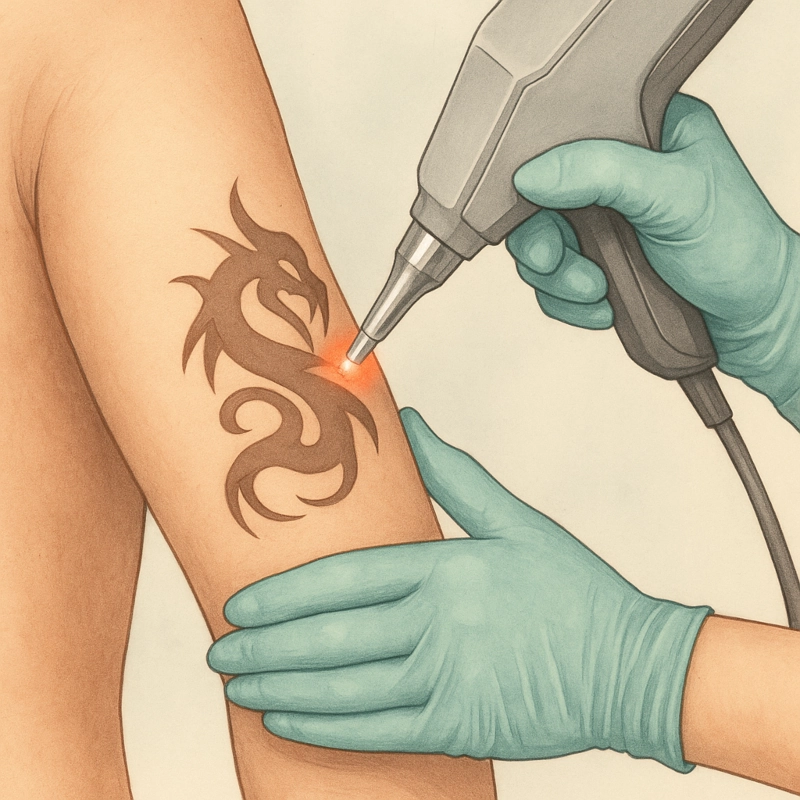
Laser tattoo removal achieves great success using advanced technology, primarily Q-switched lasers. The process works as follows:

  1. Targeting the Pigment: The laser emits powerful beams of light that pass through the top layers of the skin without causing damage.
  2. Shattering the Ink: These beams are absorbed by the dark tattoo pigment embedded in the deeper skin layers. This absorption instantly converts the light energy into powerful sound and light waves.
  3. Breaking Down the Particles: This energy shatters the large pieces of tattoo pigment into microscopic particles, leaving the surrounding healthy tissue unharmed.
  4. Immune System Response: The body's immune system recognizes these tiny particles as foreign substances and begins to absorb and eliminate them through its natural processes.

Setting Realistic Expectations: What Influences Success?

While technology is advanced, certain factors determine the effectiveness of the removal process. Can Every Tattoo Be Removed? Mostly, yes, but not always. While it's possible to remove many primary colors, some shades of purple, pink, yellow, white, and skin-colored tattoos do not respond well to laser treatment and may be impossible to remove completely. Other Influencing Factors:

  • Age of the Tattoo: Older tattoos are generally easier to remove than new ones.
  • Ink Composition: Tattoos made with dyes containing high levels of iron and copper alloys are more resistant and difficult to break down.
  • Application Technique: Professionally applied tattoos are often easier to remove than amateur ones, where ink may be deposited at inconsistent depths in the skin, requiring more sessions.

The Treatment Process and Timeline

Laser tattoo removal is a multi-session process. The exact number of treatments depends on the tattoo's size, colors, ink type, and the quality of the laser used.

  • Number of Sessions: A typical treatment plan requires between 5 to 15 sessions.
  • Session Intervals: To allow the skin to heal and the body to clear the ink particles, sessions are spaced 6 to 8 weeks apart.

Preparing for Your Tattoo Removal Session

To ensure the best results and a safe procedure, follow these steps before your appointment:

  • Avoid Sun Exposure: Protect the treatment area from the sun for at least two weeks before your session.
  • Medication Adjustments: Do not take aspirin, blood-thinning drugs, or other painkillers one day before and on the day of treatment. If you use iron medication, it should be discontinued one week prior.
  • Anesthetic Cream: If recommended by your doctor, apply a numbing anesthetic cream to the area 30-45 minutes before the procedure and cover it with plastic wrap.

Aftercare and Healing Process

Proper aftercare is crucial for healing and preventing complications.

  • Immediately After: Apply an ice pack to the area at regular intervals to reduce swelling and keep the area elevated if possible.
  • Wound Care: Apply the cream recommended by your doctor. Expect some redness and crusting within 3-4 days. During this time, gently clean the wound as directed and consider dressing it for 2-3 days to protect it from the environment.
  • Avoid Water and Heat: For the first two days, keep the area dry and avoid hot water, saunas, or steam baths. Do not enter a pool or the sea until any crusting has completely healed.
  • Sun Protection: Sunbathing is not advised until the area is fully healed. Use sunscreen on the area once the skin has closed.
  • When to Call Your Doctor: If you experience severe redness, painful swelling, or a throbbing sensation despite following the aftercare rules, contact your doctor promptly.

Frequently Asked Questions

Is the procedure painful?

The sensation is personal and varies from person to person. Generally, the pain is manageable and often described as similar to a rubber band snapping against the skin. Anesthetic creams and cooling the skin with cold air during the procedure significantly reduce discomfort.

Will it leave a scar?

The majority of laser tattoo removal treatments do not result in permanent scarring, especially when aftercare instructions are followed. However, every medical procedure has risks. Individuals with a personal or family history of developing keloids or hypertrophic scars have a higher risk.

Can it be used for permanent makeup?

This is often not recommended. Some permanent makeup inks contain metallic components. When laser light hits these metals, the ink can turn dark gray or black, creating a new problem that is very difficult to treat. This requires different types of lasers and carries risks like spotting and scarring.

Important Considerations and Choosing a Provider

Before starting treatment, it is essential to have a consultation with a specialist.

  • Medical History: Inform your doctor if you have any autoimmune diseases, a tendency to form keloids, or diabetes, as these conditions can complicate wound healing.
  • Professional Expertise: For safety and effectiveness, always ensure your tattoo removal is performed by an expert dermatologist or a qualified medical professional.
  • Cost: Prices for laser tattoo removal vary based on the size of the tattoo (often measured in cm²) and the quality of the laser technology used. While cheaper options exist, high-quality lasers often provide faster, more effective results with fewer risks.
breast
dental
hair
rhinoplasty