







AestheticStudio Logo

Keloid Treatment

Category: Body
Keloid Treatment

Treatment Details

Session

Multiple Sessions


Procedure Time

15-30 minutes


Anesthesia

None or Topical


Discomfort Period

1-2 Days


Return to work

Immediate


Full Recovery

Varies


Results

Maintenance may be required


Hospital Stay

No

Understanding Keloids: A Guide to Causes and Treatment

A keloid is a type of raised scar that results from a wound healing disorder. It is an abnormal tissue growth that occurs when the body overproduces collagen during the healing process of a wound, burn, or other skin irritation. Unlike typical scars, keloids often spread beyond the original boundaries of the wound, protruding from the normal skin tissue and taking on a raised, firm, and often red or pinkish appearance. This can cause aesthetic concerns and, for many people, affect their self-confidence. Fortunately, modern medicine offers several effective treatments.

How and Why Do Keloids Form?

The formation of a keloid is linked to the body's natural wound-healing process, which occurs in stages.

  1. Initially, the body works to close the wound.
  2. Next, a recovery stage begins where new collagen is synthesized to rebuild the tissue.
  3. In the final stage, collagen is continuously synthesized and broken down to remodel the scar.

A keloid forms during this final stage when collagen synthesis becomes excessive and outweighs the collagen breakdown process. This imbalance results in the formation of excess scar tissue, creating the keloid. With the guidance of a specialist, this condition can be effectively managed and resolved.

Why is Keloid Treatment Often Necessary?

If left untreated, keloids typically do not heal or shrink on their own and may even continue to grow larger over time. Seeking treatment is important for several reasons:

  • Aesthetic Discomfort: Keloids are visually distinct from normal skin, which can cause significant self-consciousness.
  • Physical Symptoms: They can be accompanied by persistent itching, a burning sensation, or tenderness, which can cause daily discomfort.
  • Limited Mobility: When large keloids form over or near joints, they can harden and tighten the skin, restricting movement and making daily activities difficult.

The progression of keloids varies from person to person. While some may remain stable, the general tendency is for them to grow without treatment. Therefore, consulting a specialist such as a dermatologist or plastic surgeon is crucial. Early and appropriate intervention provides the best chance of reducing the keloid's appearance and alleviating symptoms.

Common Keloid Treatment Methods

The right treatment plan depends on the keloid's size, location, and the patient's overall health. A specialist may recommend one or a combination of the following methods:

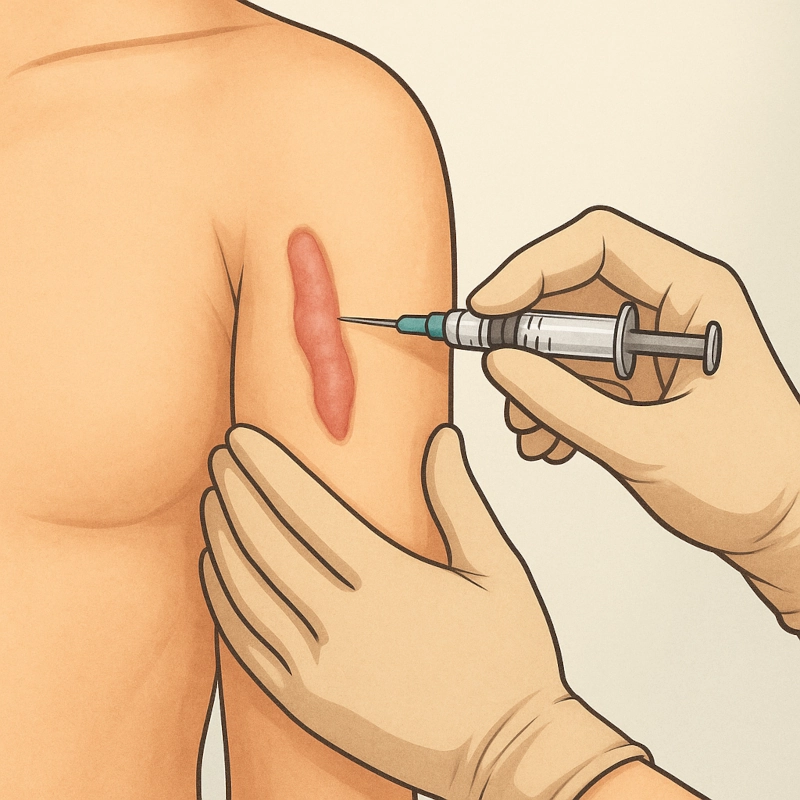
  • Corticosteroid Injections: Injecting corticosteroid drugs directly into the keloid can help reduce inflammation and shrink its size.
  • Laser Treatment: Laser therapy targets the keloid tissue to help smooth the skin's surface and reduce discoloration.
  • Cryotherapy: This widely used method involves freezing the keloid with extreme cold (liquid nitrogen), which damages the excess tissue and helps reduce its size.
  • Surgical Treatment: For large or resistant keloids, surgical removal of the tissue may be the most effective option. This is often followed by other therapies to prevent recurrence.
  • Pressure Therapy: Applying continuous pressure to the area with materials like silicone sheets or specialized pressure garments can help flatten the keloid and prevent its growth.
  • Radiotherapy: Applying low-dose radiation to the keloid area, often after surgical removal, can help prevent it from returning by controlling cell growth.
  • Medications and Creams: Various topical medications and creams can be used to alleviate the symptoms and improve the appearance of keloids.
hair
dental
rhinoplasty
breast