







FUE Hair Transplant
Category: Hair

Treatment Details
Session
1
Operation length
6-8 hours
Anesthesia
Local
Discomfort period
10 Days
Return to work
10 Days
Full recovery
10 Days
Results
Permanent
Hospital stay
No
An Introduction to FUE Hair Transplantation
The Follicular Unit Extraction (FUE) method is a modern and widely used hair transplant technique, representing a significant advancement in hair restoration since its introduction in 2004. It is a reliable and effective option for healthy men and women between the ages of 20 and 75 who are experiencing congenital or genetic hair loss.
Key Advantages of the FUE Technique
The FUE method offers significant benefits over older techniques, making it a more comfortable and effective operation for both the patient and the physician.
- Minimally Invasive: Since no scalpels or stitches are used to remove donor hair, the patient can feel more comfortable during the procedure. FUE does not leave a large linear scar, which was a common issue with previous methods.
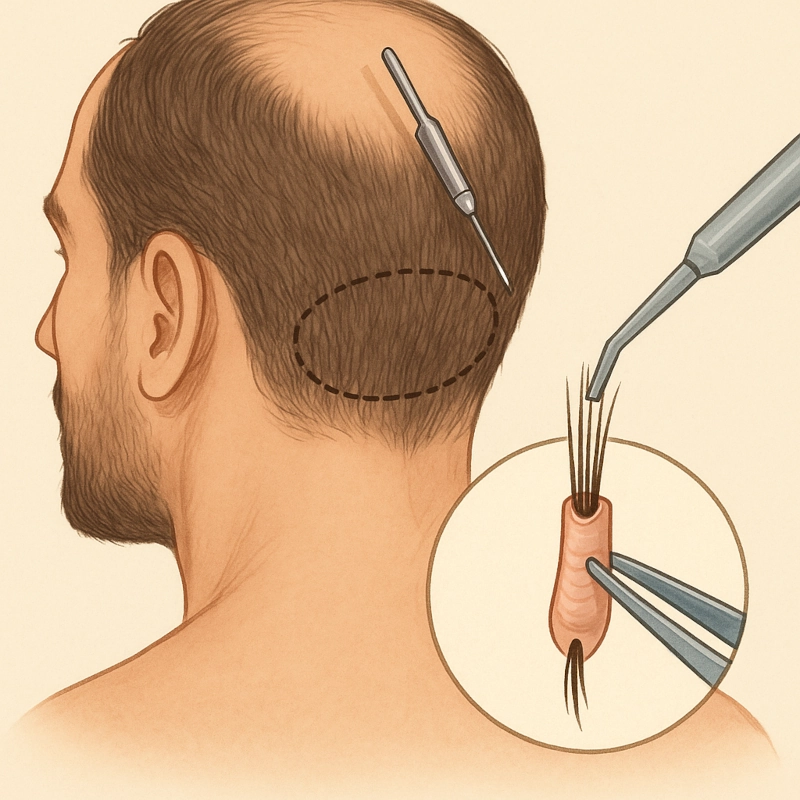
- Advanced Technology: The technique benefits from modern technology, particularly the use of a specialized motorized punch. This allows the team to harvest grafts more quickly, extract more grafts from a smaller donor area, and reduce the risk of damaging follicles.
- Efficiency and High Yield: Thanks to the motorized system, the operation time is shorter than older methods, averaging about 5 hours. It's possible to transplant 2,500-3,000 grafts (averaging 6,000-6,500 hairs) in a single session.
- Clean Grafts, Minimal Scarring: The grafts extracted via FUE are clean and free of excess tissue. This allows the surgeon to create smaller recipient channels, leading to a transplant site that heals with virtually no visible scarring.
How is an FUE Procedure Performed?
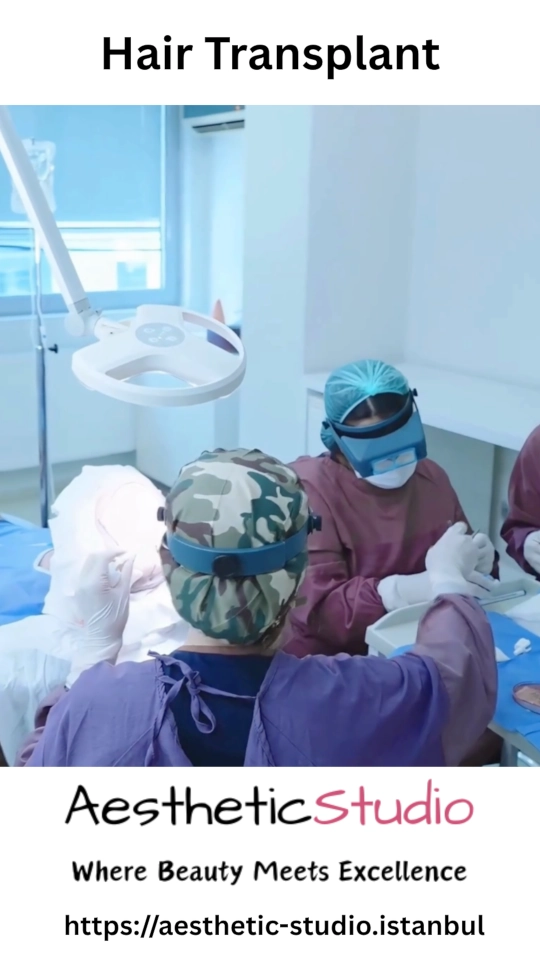
During the first stage, the medical team, often using magnifying tools like an optivisor, carefully extracts the required number of individual grafts from the donor area (usually the nape of the neck). The extractions are done selectively, ensuring that the donor area does not have a sparse or thinned-out appearance afterward. These healthy follicles are then meticulously transplanted into the areas of hair loss. Because of the precision of the FUE method, most patients find their needs are met in a single session.
What to Do After FUE Hair Transplantation
Recovery from an FUE procedure is typically very fast with minimal pain. While minor scratches may be present in the transplanted area, they heal quickly, often within 24 hours when cared for with specialized healing creams, leaving no significant wounds or scars. For the best results, patients should follow post-operative instructions carefully:
- Consume plenty of water and avoid excess salt.
- Take any prescribed medications regularly as directed.
- For the first 10 days, the transplanted area should be washed gently with a specific hair lotion, without direct touch or pressure.
Growth Timeline and Follow-Up
Patience is key after a hair transplant. The transplanted hair typically begins to grow from the third month, and it takes an average of 9 to 12 months for the hair to completely grow out and for the final result to be visible. A structured follow-up schedule is important. A hospital visit for an exfoliation process is often scheduled around day 13. Subsequent monthly check-ups are common, and supplementary treatments to strengthen the new hair may be recommended during the first few months.
Choosing a Clinic for Your FUE Transplant
FUE hair transplantation should always be performed in a sterile, professional environment, such as a hospital or a licensed medical center. The procedure should be carried out by a qualified medical team of at least three people, led by a specialist doctor. When selecting a clinic, your health must be the top priority. Ensure the facility is fully legal, and the surgical environment is sterile. The price of the procedure will vary based on the clinic, the technology used, the number of grafts required, and whether you opt for a shaven or unshaven technique. Always prioritize safety and quality over cost.