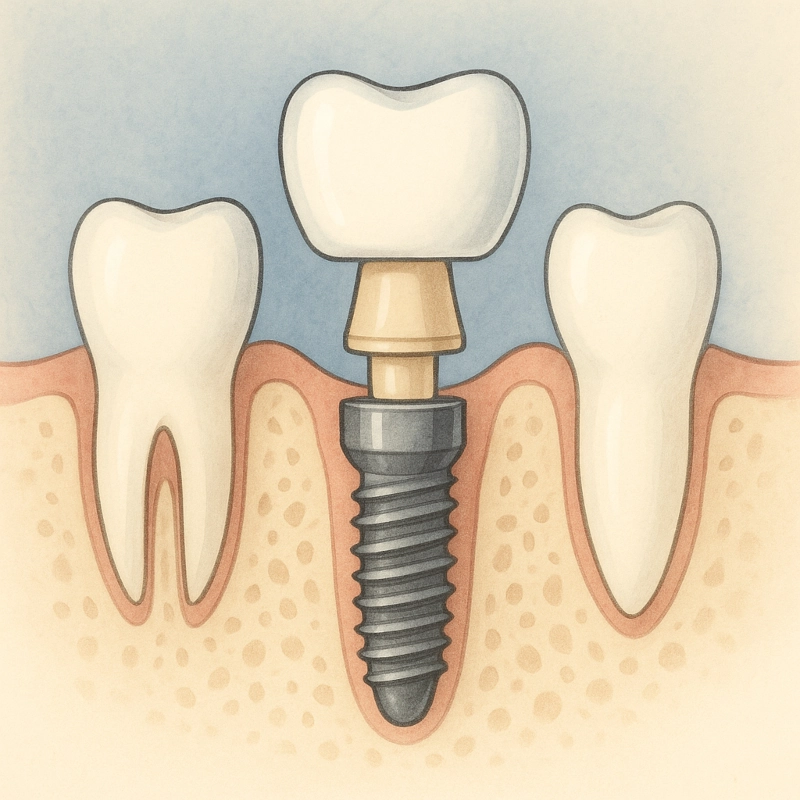








Dental Implant
Category: Dental

Treatment Details
Session
1-3 Sessions
Operation Length
20 Min. / 2 teeth
Anesthesia
Local/Sedation/General
Discomfort Period
3-4 Days
Back To Work
The same day
Full Recovery
3-7 days
Results
Continually
Hospital Stay
No
What is a Dental Implant?
A dental implant is an artificial tooth root, typically crafted from titanium, that is surgically positioned into the jawbone to support dental prosthetics. Often referred to as a "screw," it serves as a durable foundation for replacing missing teeth. This procedure addresses both the aesthetic and health-related problems that arise from tooth loss. The core of implant treatment involves placing these artificial roots, made from biocompatible titanium, into the jawbone during a minor surgical procedure in a sterile setting. Over a period of approximately two to three months, a process known as osseointegration occurs, where the implant fuses securely with the bone. Once this integration is complete and the implant can bear weight, a custom-made dental prosthesis, such as a crown or bridge, is attached. This comprehensive solution enables patients who have lost teeth to regain the ability to smile confidently, speak with clarity, and eat properly. The final result is designed to look, feel, and function just like natural teeth.
Who is a Candidate for Dental Implant Treatment?
In modern dentistry, dental implants are a viable option for a wide range of individuals. Anyone who has lost one or more teeth, or is at risk of losing them, can be considered a potential candidate. This includes patients with no teeth at all, for whom implants can provide a stable and comfortable alternative to traditional dentures. Patients with systemic health conditions, such as diabetes, hypertension, or heart disease, can often undergo implant treatment successfully, provided their condition is well-managed and they have approval from their physician. Similarly, individuals who have undergone cancer treatment or use immunosuppressive medications may be eligible after a thorough evaluation and consultation with their medical team. Ultimately, every case is unique. A comprehensive assessment by a qualified dental professional is essential to determine if implant treatment is the most suitable option based on an individual's specific health status and dental needs.
Potential Risks and Considerations in Implant Treatment
The risks associated with dental implant treatment are generally comparable to those of other common oral surgeries. The most frequent concern is inflammation or infection, which is often linked to inadequate oral hygiene either before or after the procedure. This risk can be significantly minimized through diligent cleaning and regular dental maintenance. Smoking is a major factor that can increase the risk of inflammation and impede the healing process. Patients are strongly advised to quit smoking, especially during the recovery period, to ensure the best possible outcome. In some cases, the body may not fully accept the implant, or it may fail to integrate with the jawbone. This is not typically a health risk but can cause a delay in the treatment timeline, as the site may need time to heal before another attempt can be made. Adhering closely to the surgeon's pre- and post-operative instructions is crucial for minimizing risks and achieving the most effective and lasting results.
Factors Influencing Implant Success and Longevity
The long-term success of a dental implant depends on several key factors, ranging from the quality of the implant itself to the skill of the surgeon.
- Implant Quality and Jawbone Compatibility: The design, material, and surface structure of an implant are critical for its ability to integrate with the jawbone. High-quality implants feature specially treated surfaces that promote bone growth and ensure a strong, stable bond. In contrast, implants of lesser quality may not integrate as well, leading to complications.
- Healing Speed: Advanced implant designs can help protect the treated area and accelerate the healing of both the jawbone and surrounding gum tissue. If the body perceives an implant as a foreign object, it can lead to issues like gum recession, infection, or damage to the bone.
- Preventing Bone Loss: One of the significant benefits of dental implants is their ability to prevent the bone resorption that naturally occurs in the jaw when teeth are missing. Properly placed, high-quality implants stimulate the bone, helping to maintain its density and structure.
- Structural Durability: Well-manufactured implants are made from durable, biocompatible materials that resist fracture and do not cause allergic reactions. They are designed to withstand the pressures of chewing for a lifetime. To ensure authenticity, patients are often provided with an "implant passport" that details the specifications of their implant.
The Role of Modern Technology in Implant Dentistry
Advances in technology have revolutionized dental implant procedures, leading to more precise and predictable outcomes. A key innovation is the use of CAD/CAM (Computer-Aided Design/Computer-Aided Manufacturing) systems. The process often begins with capturing highly accurate oral measurements using digital intraoral cameras. These clear, detailed images are used to create a 3D model of the patient's mouth in a digital environment. This allows the dental team to meticulously plan the design and placement of the final teeth and gums. Following the digital design phase, the dental prosthetics are manufactured using computer-aided technology. This automated, hands-free process ensures that the final crowns or bridges are crafted with exceptional precision. Materials like zirconia or e-max ceramics are often used for their aesthetic qualities, offering excellent light permeability and a close resemblance to natural teeth, resulting in a seamless and beautiful smile.